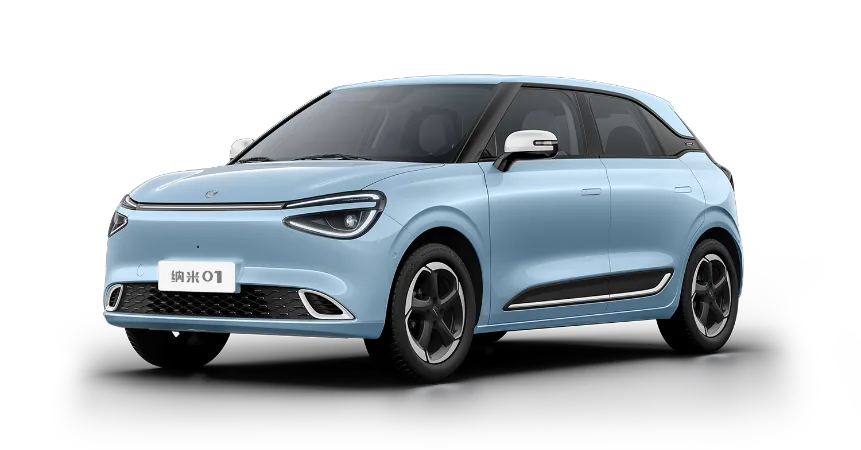
The question we’re asked most often isn’t about range. It’s “where do I charge it?” For almost everyone, the answer is simply: at home, overnight, in your own garage.
You already have the plug
Every Dongfeng comes with a portable charger that works on an ordinary household plug. Slower, but perfectly adequate if you park overnight. You wake up with a full battery, the same way you do with your phone.
Add a wall box and a Box charges from empty in about six hours. We can recommend an installer when you collect your car.
What it costs per kilometre
Electricity in Pretoria is billed per kWh, and an EV uses roughly 15–18 kWh per 100 km in normal city driving. At typical municipal tariffs that lands well under half of what the equivalent petrol trip costs, and there is no oil, no filters and no exhaust system to service.
Charge overnight and you’re usually on the cheapest tariff of the day too.
What about load-shedding?
A charged EV is unaffected by load-shedding: it’s a battery on wheels. In practice you simply plug in when the power is on, and the car’s schedule setting can be told to start charging later at night. If your home has an inverter or solar, charging becomes cheaper again.
And on a long trip?
For the Johannesburg or Polokwane runs, all three models take DC fast charging, adding a large chunk of range in well under half an hour at a highway charger, about the length of a coffee and a comfort stop.